
ACT Recognises Passivhaus as an Official Compliance Pathway
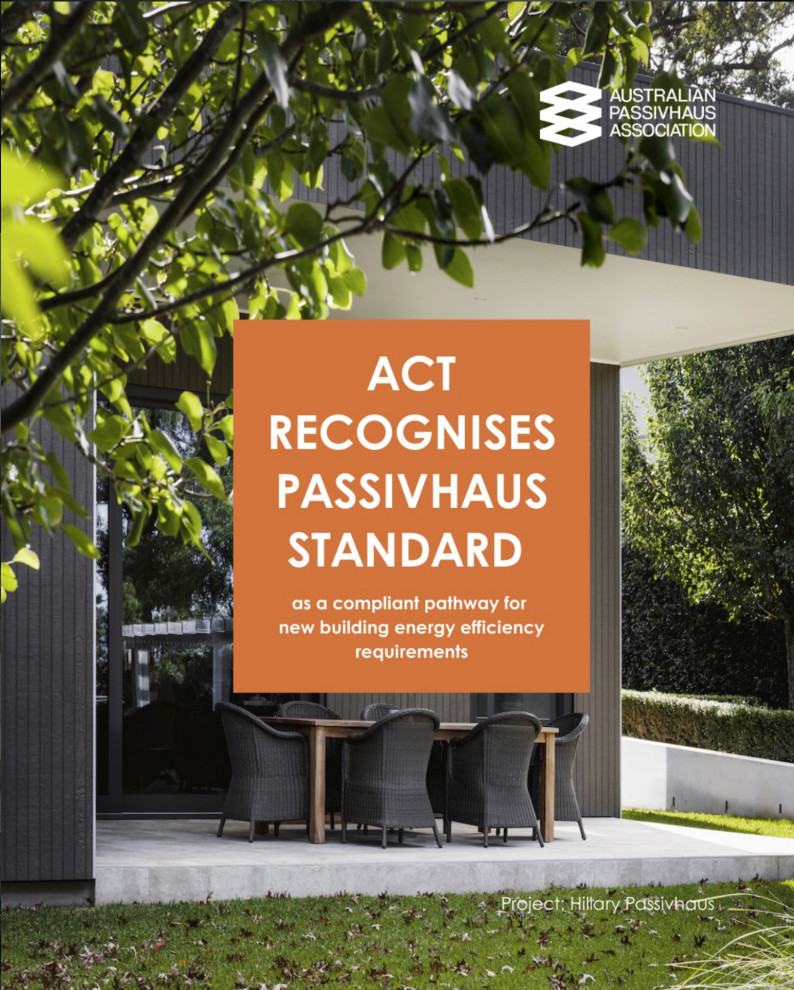
At reimagined habitat, we are always watching for policy shifts that move Australia toward healthier, more comfortable, more energy-efficient homes. And this week, the Australian Passivhaus Association (APA) shared a milestone worth celebrating — one that genuinely feels like a turning point.
The ACT Government has now formally recognised Passivhaus certification as a compliant pathway for meeting energy efficiency requirements in new homes.
This announcement, which we first saw on the APA’s website (thank you @AustralianPassivhausAssociation for leading this conversation), marks a major evolution in how we design, build, and regulate better housing in Australia.
Why This Matters
The ACT’s decision is part of their broader Construction Productivity Agenda, focused on building more homes, lifting construction quality, improving productivity, and accelerating housing delivery — all without compromising comfort or sustainability.
By recognising Passivhaus as an approved compliance pathway, the ACT Government is providing:
✔ A clear, trusted route for high-performance homes
Builders and designers pursuing world-class energy efficiency now have certainty through a recognised standard.
✔ Confidence for homeowners
Residents who want healthier, quieter, more comfortable homes can now trust that Passivhaus is officially supported.
✔ Alignment with best practice + the NCC
This move reinforces what the industry has long known: building science matters, and higher performance doesn’t just reduce energy use — it improves health, comfort, and resilience.
Minister for Planning and Sustainable Development, Chris Steel, emphasised that the ACT’s legislative and planning reforms are designed to streamline building processes while maintaining quality outcomes.
Recognising Passivhaus directly supports that goal.
Strengthening the ACT’s High-Performance Community
The ACT has long been a leader in sustainability policy, and this decision acknowledges the incredible work of the local Passivhaus community — designers, builders, certifiers, educators, and homeowners — who have been pushing for healthier, resilient homes for years.
The APA’s Acting CEO, Stalin Chakrabarty, summarised the significance beautifully:
"The ACT’s recognition of the Passivhaus Standard as an official compliance pathway is a major milestone for high-performance buildings in Australia. This is a huge win for the growing Passivhaus community in the ACT, who now have a clear and trusted pathway to deliver certified projects."
This shift also supports the ACT’s target to deliver 30,000 new homes by 2030, while improving energy performance and making better-quality housing more accessible.
Why We’re Excited
At reimagined habitat, Passive House is woven into everything we do — even when a project is not targeting certification. Building science, airtightness, ventilation, and thermal continuity are non-negotiables for us because they directly influence:
- indoor air quality
- comfort
- running costs
- durability
- long-term health
The ACT’s decision gives a broader regulatory foundation to what we already know works.
It validates the importance of designing homes that are science-based, resilient, and future-ready — homes that perform as good as they look.
What This Means for Homeowners & Builders
Whether you're designing a new home, retrofitting an existing structure, or exploring prefabrication through our Net Zero Plus panel system, this policy change signals a future where high-performance homes are not only possible — they’re supported.
If you're in the ACT or planning to build there, Passivhaus is now one of the most reliable and recognised ways to comply with energy efficiency regulations.
And as always, we’re here to help:
- integrate Passive House principles into any design
- run performance modelling through Efficient Habitat
- deliver high-performance prefabricated envelopes with Net Zero Plus
- guide homeowners and builders through smarter, science-based decisions
Better homes aren’t a niche idea anymore.
They’re becoming the norm — and today’s announcement is one big step in the right direction.