
Autumn in Australia: Why Your Home Shouldn’t Be Hot by Day and Cold by Night
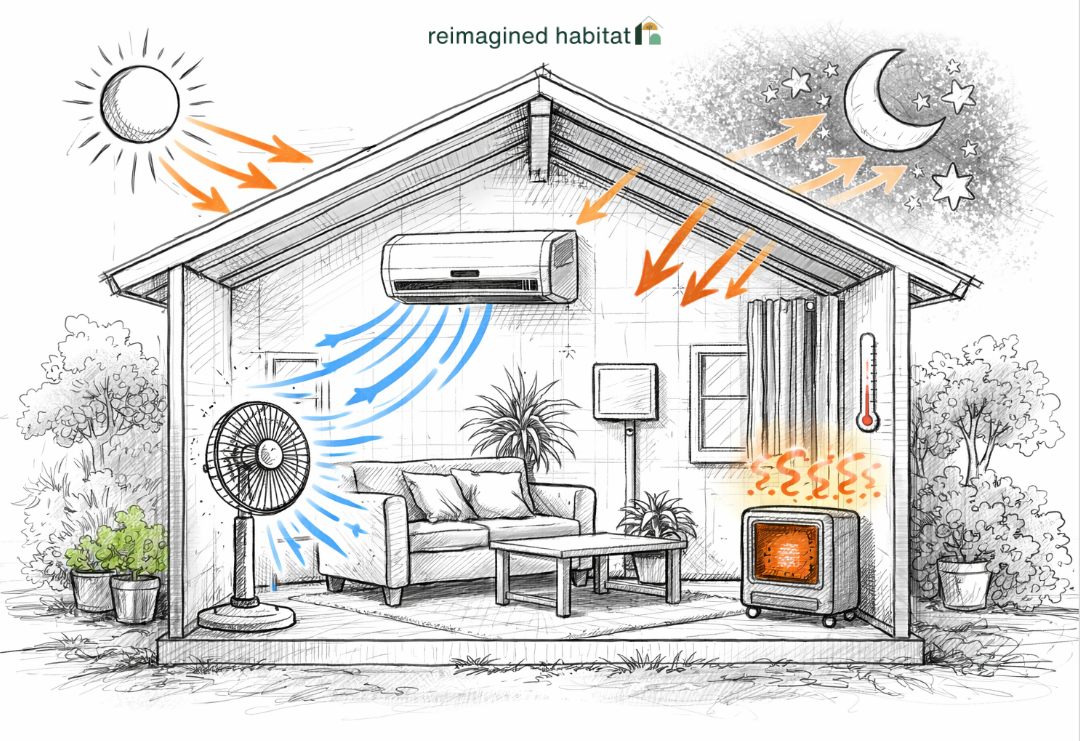
Autumn has arrived across Australia — and with it, that familiar in-between season.
Warm, even hot days in some areas.
Cool — sometimes surprisingly cold — nights.
And for many homes, that means the same frustrating cycle:
- Air-conditioning running during the day
- Heaters switched on at night
- Constant adjustments just to stay comfortable
It’s exhausting. And more importantly — it’s not something we should accept as normal.
Because a well-designed home doesn’t swing wildly between temperatures.
It stays stable, calm and comfortable, even as conditions change outside.
The problem isn’t the weather — it’s the building.
We often blame the season.
“Autumn is tricky.”
“The weather is unpredictable.”
But in reality, what you’re feeling inside your home is largely a result of how that home is designed and built.
Homes that heat up quickly during the day and lose that heat just as quickly at night typically suffer from:
- Poor insulation (or poorly installed insulation)
- Air leakage (uncontrolled draughts)
- Excessive or unprotected glazing
- Lack of shading
- No consideration for thermal mass
- Poor ventilation strategies
In other words, the building envelope isn’t doing its job.
Why these temperature swings matter
This isn’t just about comfort.
Rapid temperature fluctuations can affect:
- Sleep quality (cold bedrooms at night, overheating in the morning)
- Respiratory health (cold, damp environments increase risk of mould and illness)
- Energy bills (constant heating and cooling)
- Stress levels (your home never quite feels “right”)
Healthy homes feel consistent. Not perfect — but predictable.
And that predictability comes from good building physics.
What a high-performance home does differently
In a well-designed home — guided by Passive House thinking and healthy home principles — the goal is simple:
👉 Slow everything down.
Instead of reacting quickly to outside temperatures, the home acts as a buffer.
A well-designed building envelope:
- Continuous, well-installed insulation
- Airtight construction (reducing draughts)
- High-performance windows and doors
This reduces heat loss at night and limits heat gain during the day.
Smart solar design and shading:
- North-facing windows to capture winter sun
- Properly designed eaves or external shading
- Reduced and controlled glazing to east and west
This helps prevent overheating during the day — especially in shoulder seasons like autumn.
Thermal mass (used properly):
Materials like concrete or brick can store heat during the day and release it slowly at night — if used correctly.
But without insulation and shading, thermal mass can actually make things worse.
It’s about how the system works together.
Controlled ventilation:
Homes need fresh air — but not at the expense of comfort.
Systems like HRV/MVHR:
- Bring in fresh, filtered air
- Remove stale air and moisture
- Help maintain stable internal conditions
In autumn, when outdoor temperatures fluctuate, controlled ventilation becomes incredibly valuable.
“But I don’t live in a new home…”
The good news?
You don’t need to build a new Passive House to feel an improvement.
There are practical steps — whether you own your home or are renting.
What you can do in existing homes
Reduce heat loss at night:
- Seal gaps around doors and windows (draught sealing is one of the highest-impact upgrades)
- Use heavy curtains or thermal blinds
- Close internal doors to retain heat where needed
Manage heat gain during the day:
- Use external shading where possible (even temporary solutions like shade cloth)
- Close blinds before the sun hits the glass — not after
- Limit unnecessary opening of windows during hot periods
Use ventilation strategically:
- Open windows early morning or late evening when temperatures drop
- Create cross ventilation where possible
- Use fans to support air movement before turning on air-conditioning
Work with the building, not against it:
- Track which rooms overheat and which get cold
- Adjust how you use spaces throughout the day
- Shift activities to more comfortable zones
And if you’re renting?
This is where it gets tricky — and where we need better policy and standards.
But there are still small, practical steps:
- Temporary shading (shade cloth, outdoor umbrellas, balcony screens)
- Door snakes and window seals
- Portable fans instead of immediately using air-conditioning
- Strategic window opening for night cooling
They’re not perfect solutions — but they can make a noticeable difference.
The bigger picture: we know how to do better
This is the key message.
We already understand how to design homes that:
- Stay warm in winter nights
- Stay cool during warm days
- Maintain stable, healthy indoor conditions
This isn’t experimental. It’s proven — through Passive House projects, building science, and real-world experience.
And yet, many homes still fall short.
Autumn is a reminder
This time of year highlights the issue perfectly.
Because when your home swings from air-conditioning during the day to heating at night, it’s telling you something:
👉 The building isn’t performing.
A better way forward
At reimagined habitat, we believe homes should:
- Feel calm and stable
- Support your health
- Reduce reliance on mechanical heating and cooling
- Perform predictably — not reactively
Because comfort isn’t a luxury. And it’s not a mystery.
It’s the outcome of good decisions, made early — and supported by thoughtful improvements over time.
If you’re noticing these temperature swings in your home this autumn, you’re not alone.
But you also don’t have to accept it as “just the way it is.”
Because better is absolutely possible.