
When Homes Make You Sick: The Hidden Danger of Mould (and What We Can Do About It)
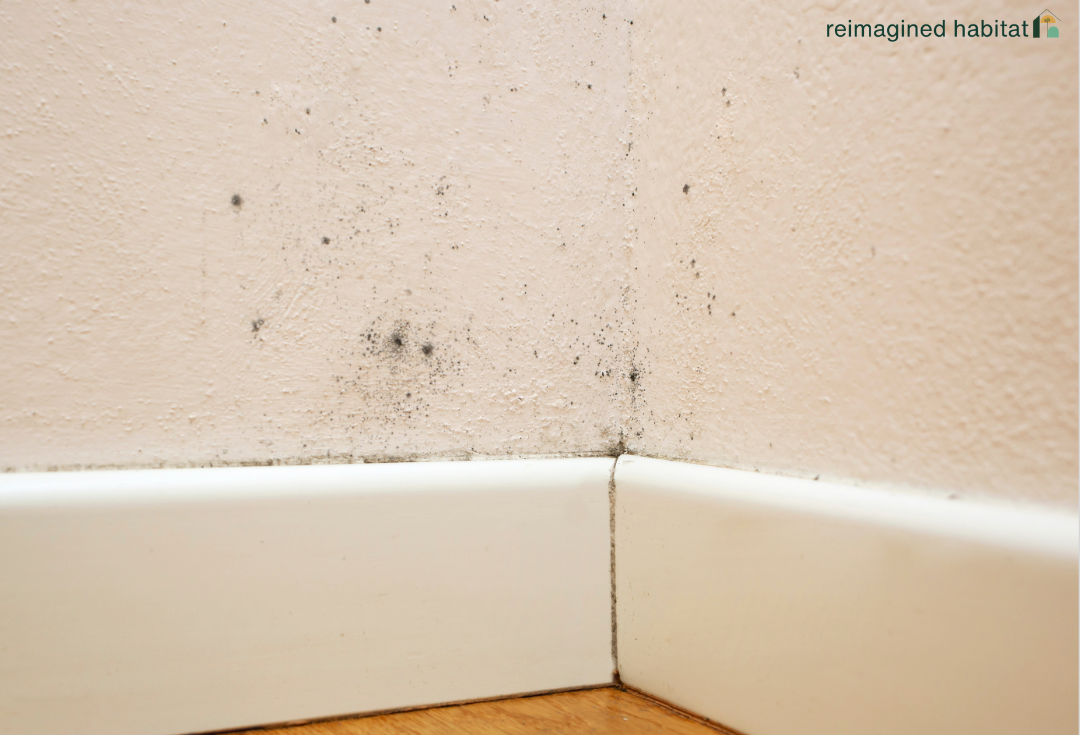
We don’t often think of our homes as something that could make us sick.
But for many people across Australia, that’s exactly what’s happening.
And in most cases, the cause isn’t obvious.
It’s not structural failure.
It’s not dramatic.
And often, it’s not even visible.
👉 It’s moisture — and the mould in homes that follows.
A Growing Problem We’re Not Talking About Enough
Mould is far more common than many people realise.
Around 1 in 9 Australian homes report issues with damp or mould — and in reality, the number is likely higher, particularly in rental housing.
The impacts are significant:
Asthma and respiratory conditions
Chronic coughing and wheezing
Allergies and skin irritation
Headaches and fatigue
Yet despite this, mould is still often treated as a surface issue.
It gets cleaned.
Painted over.
Temporarily managed.
But rarely do we ask the more important question:
👉 Why is it happening in the first place?
When a Renovation Reveals the Real Story
On one recent project, a client set out to renovate an older home to a high-performance standard.
As the building was stripped back — plasterboard removed, floors lifted — the true condition of the home became clear.
It wasn’t just ageing.
It was compromised.
Structural timber had deteriorated
Water ingress had gone unchecked
Termite damage was present
And throughout the structure:
👉 Mould — hidden, widespread, and long-term
A Personal Experience That Made It Real
When Simone visited the site to workshop the design brief, the impact was immediate.
Within a short time:
A tickle in the throat
Runny nose
Itchy, irritated eyes
Within an hour and a half, it escalated.
Medication was needed. The body was clearly reacting.
👉 To the mould.
Not everyone reacts this quickly.
But many do — especially those with asthma, allergies, or compromised immune systems.
And for others, the symptoms are more subtle:
Constant fatigue
Lingering coughs
Poor sleep
Ongoing irritation
When you live with it every day, it can start to feel normal.
But it isn’t.
Mould Is a Symptom — Not the Cause
Mould doesn’t appear randomly.
It needs:
Moisture
A surface
Time
Remove moisture — and mould cannot survive.
Which means:
👉 When mould appears, it’s pointing to a moisture problem.
And that problem is often rooted in how the home was designed and built.
Where Things Go Wrong
In many Australian homes, a combination of factors creates the perfect conditions:
Poor airtightness (uncontrolled air leakage)
Thermal bridging (cold surfaces where condensation forms)
Insufficient insulation
Lack of controlled ventilation
Poor window performance
Inadequate shading
Individually, these may seem manageable.
Together, they create a system where moisture builds up — and stays trapped.
Why This Matters More Than Ever
As homes become more energy efficient, this issue becomes even more critical.
Higher-performing homes:
Retain heat more effectively
Are more airtight
Rely on controlled systems
If these elements aren’t properly designed and coordinated, moisture risks increase.
This is not a reason to avoid better-performing homes.
👉 It’s a reason to design them properly.
A Better Approach: Designing with Building Science
At reimagined habitat, this is where a building-physics-based approach becomes essential.
Not as a label — but as a method.
By focusing on:
Continuous insulation
Eliminating thermal bridges
Airtight construction
High-performance windows
Controlled ventilation systems
Homes become:
✔ More stable in temperature
✔ Less prone to condensation
✔ Better at managing moisture
✔ Consistently supplied with fresh, filtered air
In simple terms:
👉 The conditions that allow mould to form are removed.
What You Can Do Right Now
If you’re concerned about your home, there are simple first steps.
One of the most effective:
👉 Install a home sensor
These can measure:
Temperature
Humidity
They won’t tell you directly if mould is present.
But they will tell you something just as important:
👉 Whether moisture is a problem
And once you have that insight, you can:
Identify patterns
Investigate further
Take targeted action
Without data, it’s often just guesswork.
This Is Bigger Than Buildings
This isn’t just a technical issue.
It’s a health issue.
A housing quality issue.
And increasingly, a social equity issue.
Because those most affected are often those with the least ability to change their situation.
We Can Do Better
We already know how to design homes that:
Stay comfortable year-round
Provide clean, healthy air
Avoid moisture build-up
Support the wellbeing of the people living in them
But it requires a shift:
From:
👉 Treating symptoms
To:
👉 Understanding causes
From:
👉 Minimum compliance
To:
👉 Performance-based design
Final Thought
A home should do one very simple thing:
👉 Support the health and wellbeing of the people living in it.
If it doesn’t — we need to ask why.
If this resonates, or you’re concerned about how your home is performing, the team at reimagined habitat is always happy to have a conversation.
Because healthy homes don’t happen by accident.
They are designed that way.