
passive house cost
Are Passive Homes Really Worth the Extra Cost?
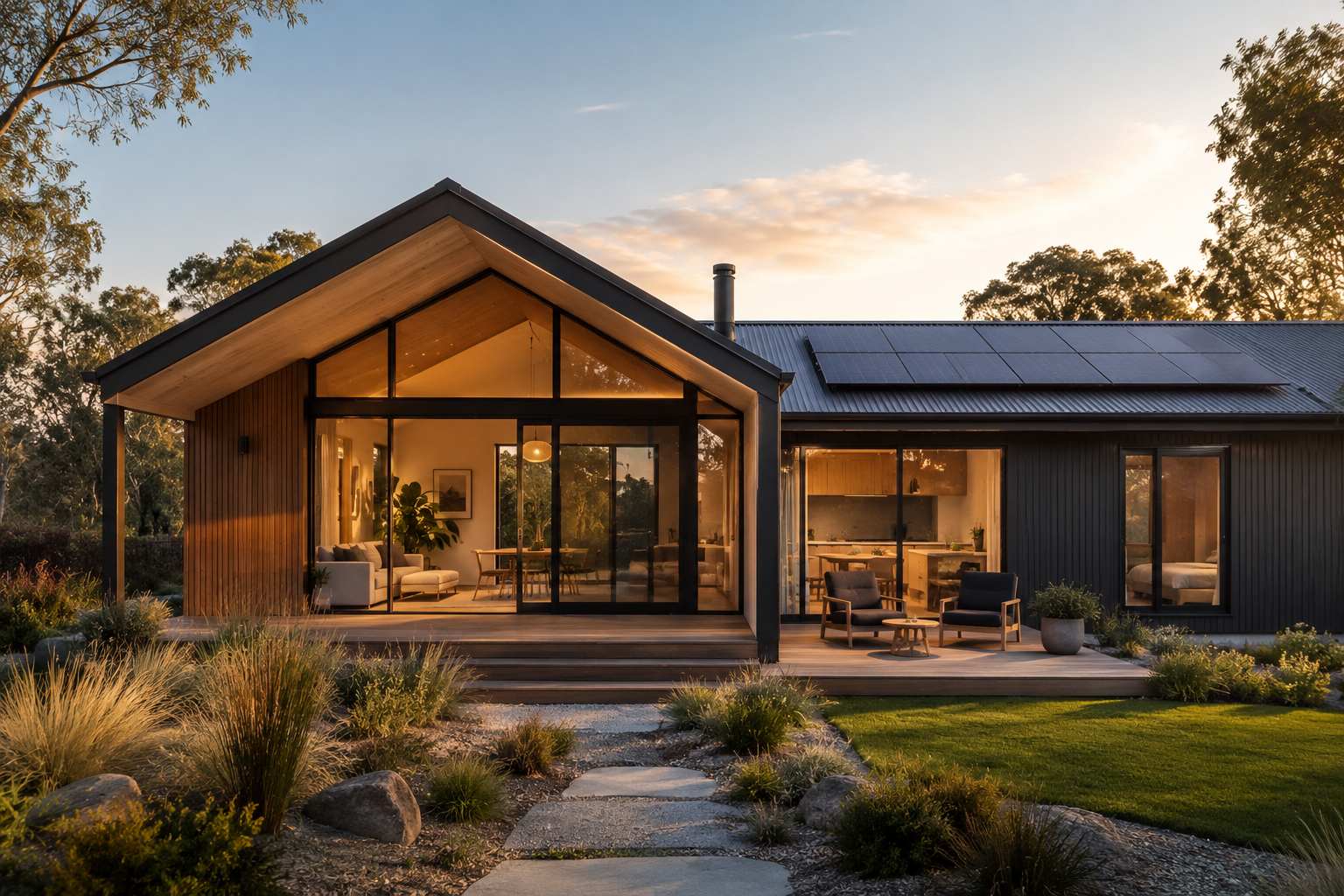
An honest look at what a Passive House costs, what you get back, and how to decide if it’s right for you — anywhere in Australia.
It’s the question we hear more than any other. You’ve read that a Passive House is warmer in winter, cooler in summer, quieter, healthier and cheap to run. Then you reach the part where it costs a little more to build, and the doubt creeps in: is it actually worth it, or is “Passive House” just a premium label?
It’s a fair question, and it deserves a straight answer rather than a sales pitch. So let’s walk through the numbers, the parts that don’t show up on a quote, and how to weigh it all up for your own home and budget.
First, what does “extra cost” really mean?
A Passive House isn’t a product you bolt on — it’s a way of designing and building so the home holds a comfortable, stable temperature with almost no energy. That performance comes from continuous insulation, high-performance windows, an airtight building envelope, the elimination of thermal bridges, and mechanical ventilation with heat recovery (MVHR) that delivers a constant supply of fresh, filtered air.
Those elements do add to the upfront build. In Australia, the premium for a certified Passive House is usually in the range of 5–15% more than a comparable standard home, and it sits at the lower end — sometimes barely there — when Passive House principles are integrated from the very first design decisions rather than bolted on late. This is exactly why we recommend running the calculations early in the design process: the earlier performance is baked in, the cheaper it is to achieve.
The “extra” also shrinks when you compare like with like. A standard new home in Australia must now meet a 7-star NatHERS rating under the National Construction Code, and getting there already requires better glazing, insulation and sealing than homes built a decade ago. So you’re often not comparing a Passive House to a cheap home — you’re comparing it to a good one, and the gap is smaller than people assume. We unpack this in more detail in Understanding the True Costs: High-Performing Homes vs. Standard Homes.
The running costs: where the money comes back
Here’s the part a build quote never shows you. The average Australian household spends roughly $1,400 a year on electricity — and a large share of that goes to heating and cooling, the single biggest energy use in most homes.
A Passive House is engineered to cut heating and cooling energy demand by up to 90%. Instead of fighting the weather with constant heating and air conditioning, the home naturally holds a stable temperature of around 20–25°C year-round. For many households that turns a painful seasonal bill into a small, predictable one.
Over the life of a mortgage, that difference compounds. Energy prices in Australia have climbed steadily for years, and every increase makes an efficient home more valuable, not less. A standard home leaves you exposed to those rises; a Passive House largely insulates you from them — literally and financially. We dig into why so many Australian homes are expensive to run in the first place, and why a better envelope is the fix.
The value you can’t see on a meter
If you only count energy savings, you undercount the return. The biggest benefits of a Passive House are the ones that quietly improve daily life:
- Health. Continuous filtered ventilation means fewer airborne pollutants, less dust and pollen, and dramatically reduced risk of condensation and mould — a problem we see make people genuinely unwell. This is why we say Passive House is about far more than just energy.
- Comfort. No cold spots, no afternoon overheating, no draughts. Just even temperatures from room to room, all year.
- Quiet. The same airtight, well-insulated envelope that keeps heat out keeps noise out too.
- Resilience. When the power goes out in a heatwave or cold snap, a Passive House stays liveable for far longer than a standard home.
These aren’t luxuries. They’re the things you actually notice every single day you live in the house — long after you’ve stopped thinking about the build cost.
What about resale value?
This is where the “extra cost” argument often flips entirely. Energy efficiency has become something Australian buyers will pay for.
Domain’s Sustainability in Property Report 2024 found that energy-efficient houses sold for around $112,000 more than comparable homes that weren’t, that they attracted roughly 16.7% more buyer interest, and that they sold about 4% faster. In some markets the premium is far larger — Melbourne led the country with a premium of nearly 29% for energy-efficient houses. Research also points to each additional NatHERS star adding around 1.3% to a home’s value.
In other words, a meaningful share of your upfront investment isn’t spent — it’s stored in the asset, and increasingly recognised at sale time.
So — is it worth it?
For most people building or renovating for the long term, the honest answer is yes, provided two things are true:
- It’s designed properly from day one. A Passive House done well costs little more than a high-quality standard build and performs beautifully for decades. A Passive House done as an afterthought can cost more and deliver less. Design discipline is everything — which is why building “to Passive House principles” isn’t the same as building one.
- You value the home over time, not just on handover day. If you’re flipping a property in eighteen months, the running-cost savings have less time to add up. If you’re building a home to actually live in, the payback — in money, health and comfort — keeps compounding for as long as you own it.
Where it might not stack up: a very short ownership horizon, a heavily compromised site or budget that forces poor design trade-offs, or a project where performance is added too late to be done efficiently.
The bottom line
A Passive House costs a little more to build and a lot less to live in. When you add the energy savings, the health and comfort benefits, the protection against rising energy prices, and the resale premium that Australian buyers now pay, the “extra cost” starts to look less like a cost and more like an investment that pays you back — month after month, and again when you sell.
The best way to know whether it’s worth it for your specific site and budget is to model it early, before any money is committed. That’s exactly what our free 30-minute design consultation is for: a practical conversation about what’s possible for your home, with no sales pitch.
Book your free 30-minute design consultation →
passive house cost passive house cost passive house cost passive house cost passive house cost passive house cost