Prefab vs Traditional Building: What Really Matters When You’re Planning Your Home
Prefab vs Traditional Building: What Really Matters When You’re Planning Your Home
Building a home is a big decision.
And somewhere along the way, most people find themselves asking:
👉 Do we build the “traditional” way… or do we explore prefabrication?
It’s a fair question.
But instead of framing it as which is better, it’s more useful to ask:
👉 What kind of building experience — and outcome — do you actually want?
Because the real difference isn’t just in how homes are built.
It’s in how predictable the process is, how the home performs, and how it feels to live in — long after construction is finished.
Two very different ways to build
Traditional construction happens entirely on site.
Trades come in one after the other — framing, roofing, plumbing, electrical, plastering — each dependent on timing, availability and weather.
It’s a process most people are familiar with.
But it also means:
- Longer timelines
- More variables
- Greater exposure to delays and cost changes
Prefabrication works differently.
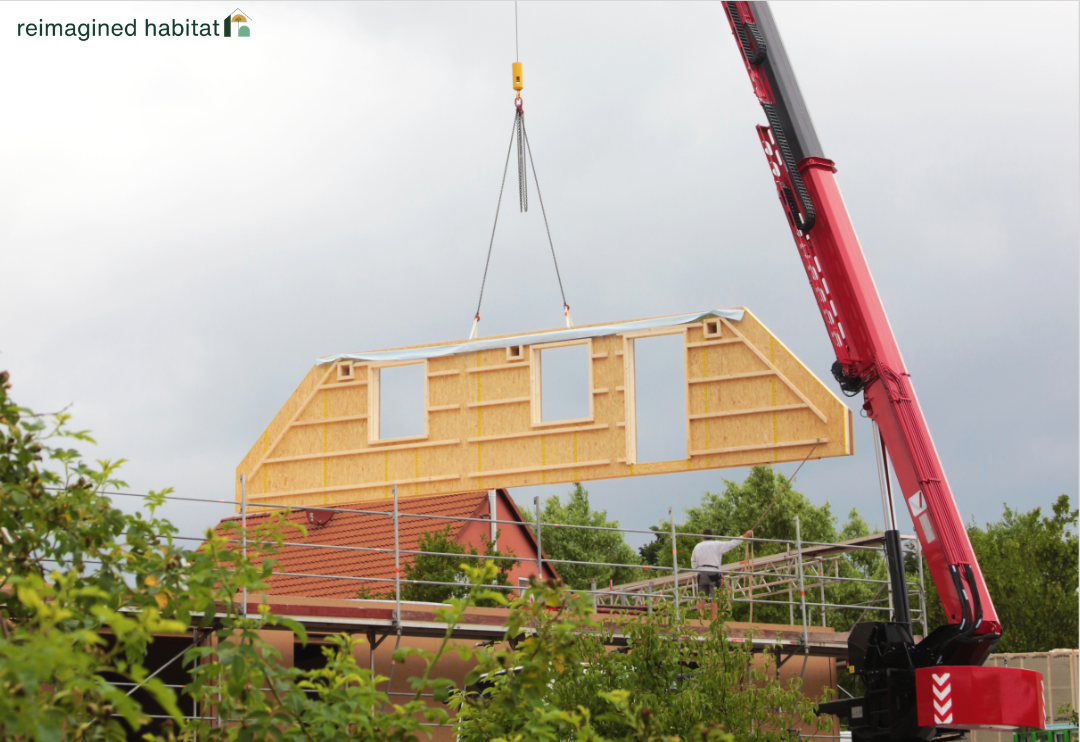
With systems like net zero plus, large parts of the home are designed and built off-site in a controlled environment — then delivered and assembled on site.
👉 The difference is not the end result.
👉 It’s how you get there.
And that difference has real implications.
Cost: it’s not just about price — it’s about certainty
One of the biggest concerns for homeowners right now is cost.
And more specifically:
👉 Cost blowouts.
Traditional construction is well known for this.
Almost half of new homes exceed their original approved cost.
And it’s not hard to see why:
- Trade shortages
- Material price fluctuations
- Weather delays
- Coordination challenges
All of this creates uncertainty — and that uncertainty often gets priced into the build.
Prefabrication changes that dynamic.
Because a significant portion of the home is manufactured upfront:
✔ Costs can be locked in early
✔ Fewer unknowns during construction
✔ Less reliance on fluctuating site conditions
At reimagined habitat, through our net zero plus system, we often see:
👉 Up to 40% of the build cost secured early (to lock-up stage)
And in today’s market, that level of certainty is incredibly valuable.
Time: the hidden cost most people underestimate
Time doesn’t just affect your schedule.
It affects your finances, your stress levels, and your overall experience.
Traditional builds can take:
👉 6–12 months (or more)
And that’s when things go well.
Delays are common:
- Weather
- Trade availability
- Sequencing issues
Prefab compresses this timeline significantly.
Manufacturing and site preparation can happen at the same time.
And once the building arrives on site:
👉 Construction is fast and efficient
Research shows modular construction can be 20–50% faster than traditional builds.
For many homeowners, that translates to:
- Less time paying rent
- Lower holding costs
- Faster move-in
Quality: consistency vs variability
This is one of the most common questions:
👉 Is prefab as good as traditional construction?
The answer is yes — and often more consistent.
Traditional construction happens:
- Outdoors
- In changing weather conditions
- With multiple teams over time
Even with the best intentions, variability is part of the process.
Prefabrication happens:
- In controlled environments
- With consistent teams
- With precision manufacturing
At reimagined habitat, this allows us to:
✔ Improve build quality
✔ Reduce errors
✔ Deliver more predictable outcomes
And importantly:
👉 It supports the high-performance outcomes we aim for in all our homes.
Performance: this is where the real difference lies
This is often the missing piece in the conversation.
Because a home isn’t just about how it’s built.
👉 It’s about how it performs.
Through net zero habitats, we design homes that:
- Stay comfortable year-round
- Use very little energy
- Provide healthy indoor air
- Avoid overheating and condensation
And prefabrication helps us deliver this more reliably.
Because:
- Details are controlled
- Airtightness is easier to achieve
- Thermal performance is more consistent
Materials matter: why timber and wood fibre make a difference
Our net zero plus system is based on timber construction — not just for sustainability, but for performance.
Timber:
👉 Stores carbon within the building structure
👉 Reduces embodied carbon
👉 Creates a warmer, more natural internal environment
We also use wood fibre insulation throughout our system.
This is not just insulation.
It:
- Provides excellent thermal performance
- Helps regulate moisture
- Reduces overheating in summer
- Improves indoor air quality
And importantly:
👉 It’s another carbon sink, storing carbon within the building fabric.
Disruption: what happens during the build matters too
Traditional construction means:
- Months of trades on site
- Noise, dust and disruption
- Constant activity around your home or land
Prefab is very different.
Because most of the work happens off-site:
👉 On-site disruption is short and controlled
Instead of months of building activity:
👉 You get a short, focused installation period
And then it’s done.
Sustainability: beyond energy efficiency
Sustainability is not just about operational energy.
It’s also about:
- Materials
- Waste
- Construction impact
Traditional construction generates significant waste — much of it ending up in landfill.
Prefab reduces this dramatically through:
- Precision manufacturing
- Reuse of materials
- Reduced site impact
Studies have shown waste reductions of over 80% compared to conventional construction.
And when combined with timber and natural materials:
👉 The overall impact is significantly lower.
So… which one is right for you?
There’s no one-size-fits-all answer.
But generally speaking:
Prefab is a strong fit if you:
✔ Want more cost certainty
✔ Value shorter build times
✔ Want a high-performance home
✔ Prefer a more predictable process
✔ Want to reduce environmental impact
Traditional construction may suit you if:
- Your design is highly complex or unconventional
- You require continuous on-site customisation
The bigger picture
This isn’t just a construction choice.
It’s about:
👉 How much uncertainty you’re willing to accept
👉 How important performance is to you
👉 And how you want your home to feel — now and in the future
At reimagined habitat, our focus is not just on building homes.
It’s on creating:
- Better building processes
- Better performing homes
- Better living outcomes
Final thought
Prefab isn’t about compromise.
It’s about doing things differently — with more intention, more control, and more certainty.
Because building a home shouldn’t feel like a risk.
It should feel like a well-considered decision.
If you’re currently exploring your options and not sure what’s right for your project, we’re always happy to have a conversation.
No pressure. Just clarity.