
australian housing affordability australian housing affordability
Australian Housing Affordability: The Hidden Cost of Buying a Home
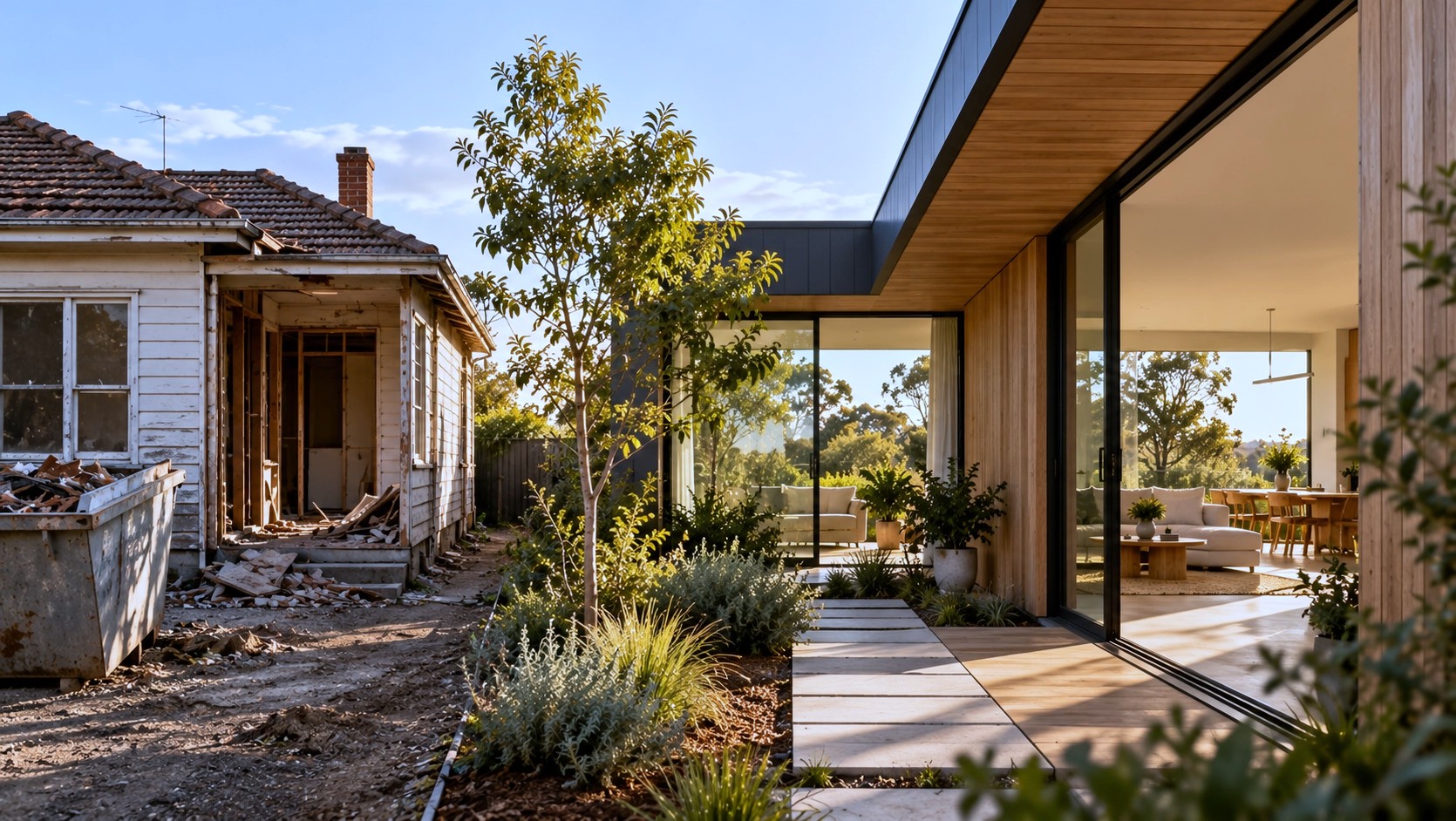
Here’s a paradox that should stop us in our tracks. Australian property prices have been falling — in some places at the fastest rate in 40 years — and yet buying a home has become harder, not easier.
According to recent Canstar analysis of realestate.com.au data, the income you now need to buy a typical home has surged even as prices slid. A median house in Sydney now requires a pre-tax income of close to $250,000 a year — up around $11,000 in just twelve months. In Brisbane, the average house now needs about $185,000, up from $160,000. In Melbourne, a median house calls for an income of around $145,000. In South Australia, the income a single buyer needs has jumped to roughly $167,000, from under $140,000 a year earlier. Meanwhile, wages have grown barely 3–4%.
These figures reveal a difficult reality for Australian housing affordability: lower property prices don’t automatically make homeownership more accessible.
Melbourne shows it starkly. Despite house prices there falling sharply, only around 146 suburbs remain affordable for a two-person household earning enough to buy a typically priced $960,000 home on a 30-year mortgage. The price drops simply haven’t translated into access.
How can prices fall and affordability still get worse? Interest rates. With the cash rate at a 15-year high and banks passing hikes through in full, borrowing costs have climbed far faster than prices have dropped. As Master Builders NSW put it, we’re in the ridiculous situation where house prices are falling at the fastest rate in decades, yet affordability isn’t improving at all.
That’s a sobering story on its own. But it’s only part of the picture — and the parts that get left out are the ones we think about every day.
The first missing half: what a home costs to live in
The affordability conversation almost always stops at the purchase. But as the Australian Passivhaus Association recently argued so well, the repayment is only part of the story.
On top of the mortgage, every household pays to heat, cool and power its home — and unlike a mortgage, that bill never gets paid off. Heating and cooling alone make up around 40% of home energy use, and around 70% of Australia’s existing homes rate three stars or lower out of ten. So the question was never only what does a home cost to buy? It’s what does a home cost to live in?
This is a part of Australian housing affordability that deserves far more attention. We’ve written about the true cost difference between high-performing and standard homes, and about why a high-performance home is cost-optimal over its lifetime, precisely because this half of the equation gets ignored.
But there’s a second missing half — and it barely rates a mention in the affordability headlines at all.
The second missing half: the cost to build
We talk endlessly about the cost of buying a home. We rarely talk about the cost of building one. And right now, construction costs are a crisis hiding inside the housing crisis.
Here’s the part that makes it so brutal, especially in the established suburbs where people actually want to live. In those areas, you almost never find vacant land. So to build, you first have to buy a house on land — and even if that house is run-down, draughty and barely livable, you still pay today’s eye-watering price just to secure the property. The dwelling itself is often worth nothing to you; you’re buying dirt in a good location at a premium.
And then you still have to build.
That’s the trap. We all know owning a home has become harder and harder. But building your own home has become harder still — dramatically so. For most first-home buyers and young families, a custom-built home isn’t a stretch goal; it’s a fantasy. Buy the site at established-suburb prices, then fund a full build on top, while rates sit at a 15-year high? The maths simply doesn’t work for most people.
Any serious conversation about Australian housing affordability needs to consider this combined cost: securing a suitable site and then paying to build a home on it.
And if you renovate instead?
For many people who buy an established home, the plan isn’t to knock down and rebuild — it’s to renovate. And that comes with its own hefty price tag, in two very different categories.
The first is what I often call the bling: making the home look better and function better for modern life. New kitchen and bathrooms, opening up a poky layout, adding a room, reworking the flow so it actually suits how we live today. This is already a huge cost on its own — and it’s the money people are most willing to spend, because it’s visible, it’s enjoyable, and it obviously adds resale value, so it feels like a sound investment.
But even the bling often isn’t feasible. Sometimes the family has simply poured everything into buying the home and there’s nothing left to renovate with. And then there’s the overcapitalisation trap: spend too much relative to the street and the area, and you may never get it back. In some cases the bank won’t even lend you the money for the works because the finished value won’t support it — and even if you have the cash, it can be a poor financial decision to sink it in.
And that’s all before we get to the part that matters most to us: improving the efficiency and health of the home. Insulating, sealing, upgrading windows, sorting out ventilation and thermal performance — doing a genuine deep retrofit carries a serious price tag of its own, and it usually competes for the same budget as the bling (and too often loses).
Here’s the thing we want people to understand: that spend isn’t just about reducing running costs. It’s about comfort and health — a home that’s warm in winter, cool in summer, free of mould and damp, and genuinely good to live in. That’s the part that never shows up in a resale appraisal, and it’s exactly the part most renovations skip. Which is why we spend so much time helping people weigh up whether to renovate or build new in the first place.
When we talk about Australian housing affordability, the cost of making an existing home healthy, comfortable and efficient needs to be part of the conversation, too.
The “consolation prize” — and its hidden cost
The lucky ones who can build something new usually end up with a volume-builder home. It’s the affordable-looking option, the one that seems to make the numbers add up.
But this is where the story turns, because what you’re actually buying is often not what’s on the label.
Most volume-builder homes are sold with a NatHERS star rating — but that rating is a modelled prediction, generated in software before construction, and it’s almost never verified once the home is built. There’s no blower-door test, no check that the insulation went in properly, no confirmation the finished home performs anywhere near its rating. This is the performance gap, and it’s enormous. A home rated 6 or 7 stars on paper routinely performs far worse in reality — leaking heat in winter, baking in summer, and costing a fortune to keep comfortable. We’ve written about why you can’t always trust a star rating and why “building to passive house principles” without the rigour behind it falls short.
So the “affordable” new home often isn’t affordable at all. It’s cheaper to buy and expensive to live in — the exact trap the affordability headlines never mention. You’ve bought the sticker price and inherited the running costs for the next fifty years.
This is why the price paid at settlement cannot tell the whole story of Australian housing affordability. The home’s actual performance can shape household expenses for decades.
The gap to a home that actually performs
From there, the distance to a genuinely well-built home can feel vast. A custom-designed home sits well above a volume build on price — and a high-performance or Passivhaus home, with verified airtightness, proper insulation, thermal-bridge-free detailing and heat-recovery ventilation, can feel further still. For a young family already stretched to buy the land, it can look impossibly out of reach.
But that gap is smaller than it appears — and it’s shrinking — for two reasons.
First, the real cost premium for a well-designed passive house is far lower than people assume, especially when performance is designed in from the very first sketch rather than bolted on at the end. Most of the blowout people fear comes from doing it late or doing it wrong, not from the standard itself.
Second — and this is where it gets genuinely hopeful — prefab changes the equation. Building a high-performance home off-site, in a factory, is how you make quality repeatable and bring the cost down. Precision manufacturing is exactly what guarantees the airtightness and detailing a high-performance home depends on, with far less waste, less weather risk, and more cost certainty than a traditional site build. It’s why we keep coming back to prefab as a serious answer to our building problems, and why recent prefab finance changes matter so much.
Through our prefab building systems at net zero plus, and our pre-designed Net Zero Habitat homes, the hard, expensive design and engineering work is already done and proven — so a genuinely comfortable, low-running-cost home becomes something you don’t have to reinvent, or pay a bespoke premium for, from scratch.
This approach won’t resolve every structural barrier to Australian housing affordability, but it offers another way to think about the relationship between build quality, cost certainty and long-term household expenses.
That’s the bridge across the gap: not a cheaper home that quietly costs you later, but a better home, made attainable and repeatable.
Why we created Net Zero Habitat
This is exactly why we created our pre-designed Net Zero Habitat homes.
A one-off, custom, certified high-performance home is wonderful — and for most people, out of reach. The design, engineering and energy modelling that go into getting a home to perform are expensive to do from scratch, every single time. So we asked a simple question: what if we did that hard work once, extremely well, and then made it repeatable?
Net Zero Habitat is a range of pre-designed, high-performance prefab homes, ready to adapt to your site. The orientation logic, the building physics, the detailing, the airtightness strategy — it’s already resolved and proven, so you’re not paying to reinvent it. Built with prefab precision through net zero plus, that quality is delivered consistently rather than hoped for, and the cost of reaching genuine performance comes down.
We want to be honest about what this is and isn’t. It does not magically make a high-performance home affordable for everyone — we know that, and we won’t pretend otherwise. The barriers we’ve described in this article are real and they’re structural. But it does make a high-performing home meaningfully more affordable than a bespoke one, and we hope that brings it within reach of more people than before. Every family who gets a comfortable, healthy, low-running-cost home instead of a leaky one that performs nothing like its rating is a win worth chasing.
It’s a step, not a silver bullet. But in a system this stuck, moving the needle at all — making the good option a little more accessible — matters.
The real affordability conversation
So let’s widen the lens. Real Australian housing affordability isn’t just the salary you need to get a loan across the line. It’s three things at once:
The cost to buy — the part the headlines obsess over.
The cost to build — or to renovate a run-down home — the crisis hiding inside the crisis, made worse by having to buy a run-down property on expensive land before you can even start, then facing the cost of the “bling”, the overcapitalisation trap, and the price of making it efficient and healthy on top.
The cost to live in — the bill that never gets paid off, quietly set on the day the home is designed.
A system that drives people towards the cheapest-to-buy option, ignores the cost to build, and then saddles them with a home that performs nothing like its rating isn’t solving affordability. It’s deferring the cost and hoping no one notices.
We think there’s a better path — smaller, smarter, higher-performing homes, built with prefab precision so quality is repeatable and verified, designed so “affordable” means affordable to live in, not just to buy.
Falling prices alone were never going to fix this. Building better might.
If you’d like to talk about a home that’s affordable to build and to live in, get in touch →
Affordability figures from Canstar analysis of realestate.com.au data, October 2026 (“Salary needed to buy average Australian home surges despite falling property prices” and “Falling Melbourne house prices fail to help buyers as mortgage rates bite”). Running-cost and performance context drawn from the Australian Passivhaus Association’s “What does a home really cost?”, with figures from the RBA, Cotality, energy.gov.au and the Passive House Institute. Our own cost, prefab and performance articles are linked throughout.