
cost of building a home cost of building a home cost of building a home
What Does a Home Really Cost?
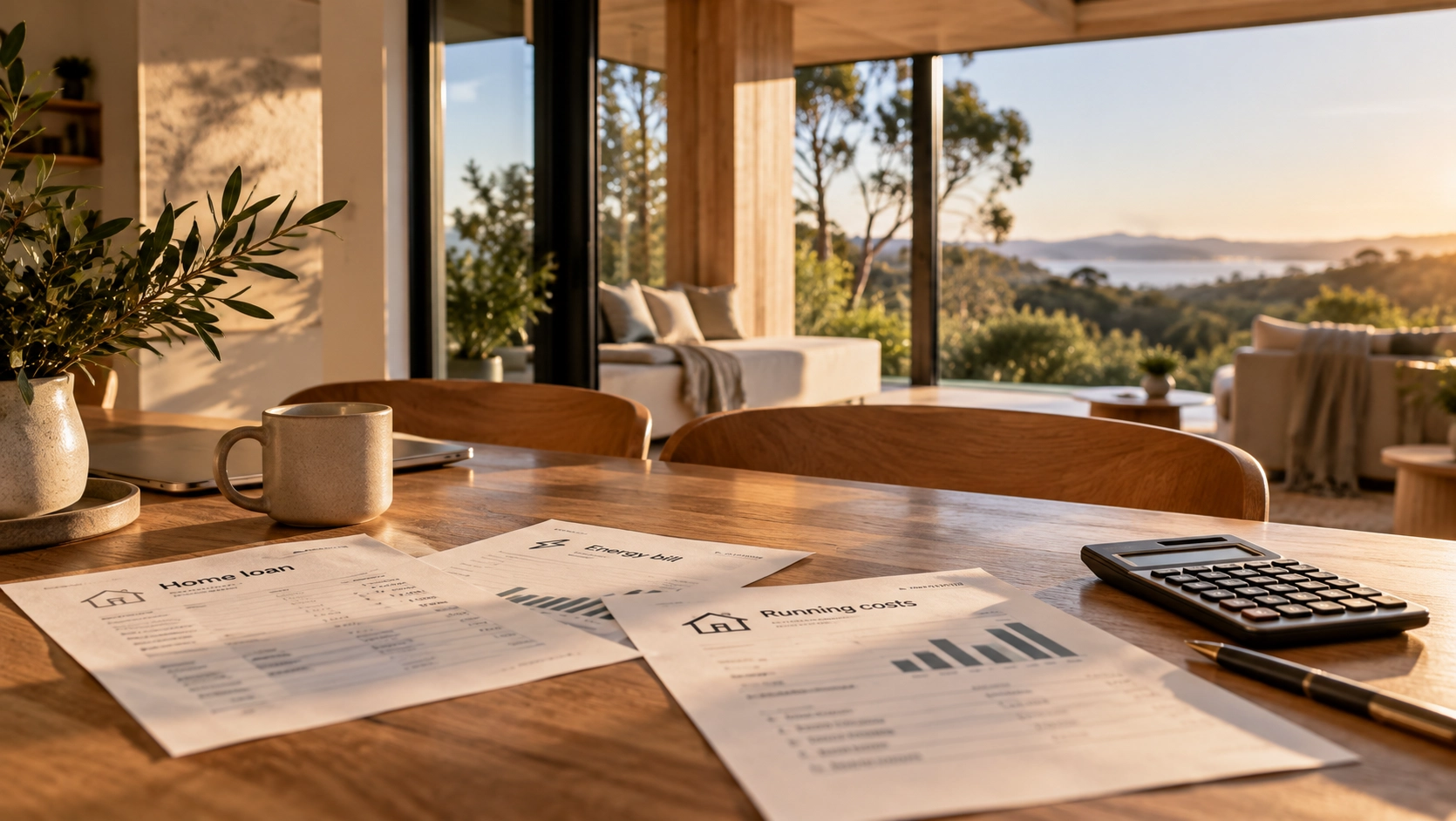
Every time the Reserve Bank meets, the whole country pays attention. Mortgage holders watch the cash rate decision, and whatever the outcome, the pressure on household budgets is real.
But there’s another cost that rarely makes the headlines: the cost of building a home that is affordable to live in.
As passive house designers, we think about this every day. This article draws on a recent message from the Australian Passivhaus Association that put it better than almost anything we’ve read, and we wanted to share it.
The squeeze is real — but it’s only half the story
The numbers on buying a home are sobering. It now takes around 50.4% of median household income to service a new mortgage in Adelaide, and 45% Australia-wide. Renters are under the same squeeze, spending a record 33.4% of their income on rent. One in three mortgage holders is now at risk of mortgage stress — the highest level in 18 years. And these figures were measured before this year’s three rate rises, so for many households the pressure today is greater still.
But the repayment is only part of the story.
On top of the mortgage or the rent, every household also pays to heat, cool and power its home. And unlike a mortgage, that bill never gets paid off.
So when we talk about the cost of building a home, we shouldn’t only ask what it costs to buy. We should also ask what it costs to live in.
The bill that never ends
Heating and cooling is the biggest single slice of energy use in most Australian homes — between 20 and 50% depending on climate, and around 40% on average.
And most of our homes simply aren’t built to hold heat in winter or keep it out in summer. Around 70% of Australia’s 11 million existing homes rate three stars or lower out of ten on NatHERS. New homes must now meet a 7-star minimum, but the existing stock is where most of us live.
That gap costs households. A poorly performing home leaks heat in winter, gains it in summer, and leaves occupants paying to fight the very building they live in.
The Australian Government’s move to open NatHERS ratings to existing homes from mid-2026 is a welcome step. For the first time, many households will be able to see what a home costs to run before they buy or rent it. And performance pays back: government figures show lifting a home from 3 to 5 stars could cut the energy needed for heating and cooling by around 40%.
Building performance isn’t just an environmental issue. It’s household economics — and an important part of understanding the real cost of building a home.
Build it right, once
This is where Passivhaus comes in. It takes a fabric-first approach: comfort comes from the building itself, not from machines working against it.
The five Passivhaus principles are straightforward — insulation, airtightness, high-performance windows, thermal bridges designed out, and ventilation with heat recovery. Together they deliver remarkable results. Passive House Institute research points to heating and cooling energy savings of up to 90% compared with typical existing building stock, and over 75% compared with average new builds.
Interest rates rise and fall. Energy prices move. A well-built home keeps performing for generations.
When considering the cost of building a home, investing in its performance from the beginning can make a difference to what it costs to operate over the years that follow.
From housing affordability to household affordability
Here’s the shift we believe Australia needs to make. The cheapest home to build is not always the cheapest home to live in — and every housing project should really answer two questions, not one.
Day one: what will it cost to build?
Every year after: what will it cost to run for the next 50 years?
Right now, we mostly ask the first. The shift we need is from the cost to build to the cost to live.
As Stalin Chakrabarty, CEO of the Australian Passivhaus Association, puts it:
“Australians are rightly focused on what they pay the bank each month. But a home’s running costs don’t end when the mortgage does. If we want lasting cost-of-living relief, we need homes that are cheaper to operate, and an industry with the skills to build them.”
Looking at the cost of building a home through this wider lens means considering not just the initial construction budget, but also the ongoing expenses that shape household affordability for decades.
The missing ingredient: skills
That last point matters enormously. Australia can’t deliver these homes at scale until more of the industry knows how to build them.
Performance lives in the details. A membrane taped properly. A thermal bridge designed out. A window installed right. Each one depends on a designer, builder or tradesperson who knows what good actually looks like. It’s why training — like the Australian Passivhaus Association’s work educating architects, designers, builders and trades in the Passivhaus standard, from design fundamentals through to its Certified Passivhaus Tradesperson course — is so important. The homes Australians need will be built by people with these skills.
The quality of design and construction influences more than the upfront cost of building a home. It also affects comfort, energy use and the long-term cost of living in it.
Our take
None of this is abstract to us. It’s the reason reimagined habitat exists: to design and build homes that are affordable to live in, not just to buy — comfortable in every season, healthy, and gentle on the bills for decades to come.
So the next time the Reserve Bank meets and the conversation turns to what a home costs, it’s worth remembering the other half of the equation. The repayment eventually ends. The running costs don’t — unless we build better.
If you’d like a home that costs less to live in, let’s talk →
This article draws on the Australian Passivhaus Association’s newsletter “What does a home really cost?” (September 2026), with figures from the Reserve Bank of Australia, Cotality’s Housing Affordability Report (November 2025), energy.gov.au, the Passive House Institute, and Australian Government energy-rating sources. Shared with thanks and full credit to the APA.