When 17°C Outside Turned Into 28°C Inside: A Real Story About Why Our Homes Still Fail Us
By reimagined habitat, based on Simone’s personal experience
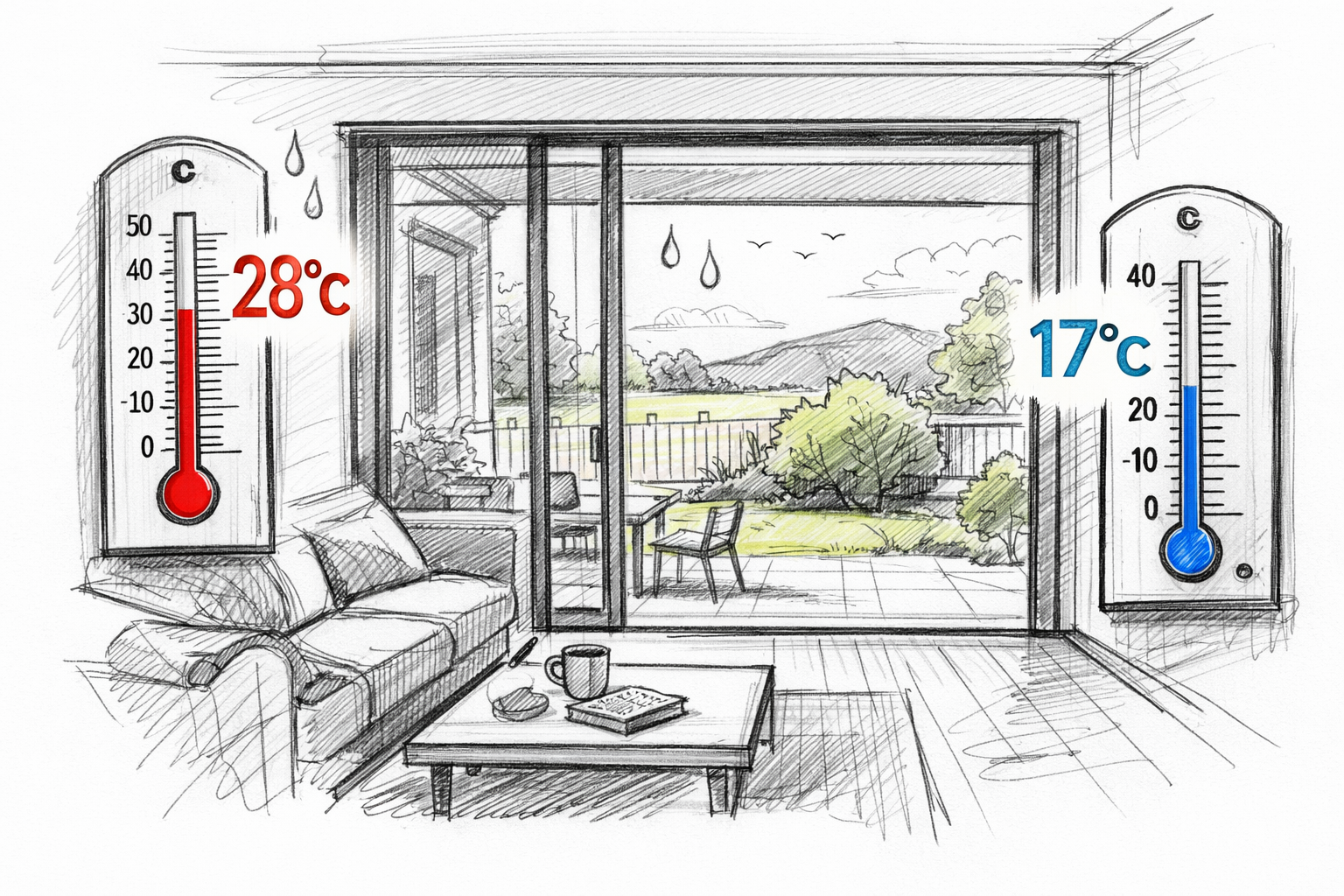
The other day it was 17°C outside.
Inside Simone’s home?
28°C.
Sitting in her living room, it felt less like autumn… and more like a sauna.
And this wasn’t a one-off.
It’s the reality of many Australian homes — including the rental Simone is currently living in.
This should not be normal
In Australia, we’ve become used to homes behaving like this:
Hot during the day
Cold at night
Constant adjustments just to stay comfortable
Air-conditioning switches on.
Heaters follow later.
And comfort feels like something we have to chase.
But as Simone has written previously in her blog:
When Climate Research Becomes Personal: Lessons on Heat, Health and Housing
This isn’t a weather problem. It’s a building problem.
From a healthy home… back to reality
After living for years in a genuinely comfortable Passive House, Simone returned to the rental market.
What she found was confronting.
The current home is:
Relatively new
Well presented
Nicely finished
But from a performance perspective, it highlights many of the common issues seen across Australian housing.
What’s going wrong?
This home is a clear example of how small decisions can have a big impact.
Dark materials everywhere
Black roof tiles
Dark brick walls
These materials absorb heat throughout the day — even on mild days.
That heat is then slowly released into the home, long after outdoor temperatures drop.
No external shading
No eaves
No shading devices
No protection from direct sun
Once sunlight hits the glass, heat enters the home.
At that point, blinds and air-conditioning are simply trying to compensate.
Too much glazing
Full-height glazing in every room
Large sliding doors throughout
While visually appealing, this creates significant heat gain — particularly without shading or high-performance glazing.
No cross ventilation
There is no effective way to move air through the home.
No natural cooling strategy.
No ability to flush heat out.
A weak building envelope
At the core of all of this:
The building envelope isn’t doing its job.
As outlined in our autumn blog post, homes that overheat during the day and lose heat at night often have:
Poor or inconsistent insulation
Air leakage
Uncontrolled glazing
Lack of shading
No clear ventilation strategy
The result
Even on a mild 17°C day:
Indoor temperatures climbed quickly
Heat was trapped inside
Cooling became difficult
Comfort relied entirely on mechanical systems
Why this matters
This is not just about comfort.
It directly affects:
Health — overheating, poor air quality, increased mould risk
Energy costs — constant heating and cooling
Wellbeing — homes that never feel stable or comfortable
And importantly:
This is happening in new homes.
Homes that meet minimum standards.
Homes that look “good” on the surface.
We already know how to do better
This is what makes it so frustrating.
None of this is new.
We already understand how to design homes that:
Maintain stable temperatures
Avoid overheating
Retain warmth when needed
Provide fresh, controlled ventilation
Reduce reliance on heating and cooling
These outcomes are grounded in:
Passive solar design
Passive House thinking
Healthy home principles
What could have been done differently?
Without increasing cost significantly, this home could have performed very differently with:
Lighter roof and wall colours
Proper external shading
More considered glazing design
Cross ventilation strategies
Improved insulation and airtightness
These are not complex solutions. They are fundamentals.
The bigger issue
Many homes are still being designed for:
Outdated climate assumptions
Minimum compliance
Short-term cost decisions
Rather than:
Real-world performance
Long-term comfort
Health and resilience
So why are we still accepting this?
Why are homes still being built that:
Overheat on mild days
Lose heat quickly at night
Depend entirely on mechanical systems
When we already know how to do better?
A conversation worth having
Simone’s experience is not unique.
It reflects a much broader issue across the housing market — particularly in rental housing.
And it raises important questions:
What are we actually delivering as “standard” housing?
Who carries the cost of poor performance?
And how do we shift from minimum compliance to meaningful outcomes?
At reimagined habitat, we believe homes should:
Feel stable and comfortable
Support health and wellbeing
Work with the climate — not against it
Perform consistently over time
Because comfort is not accidental.
It is designed.
If this resonates with your own experience, we’d love to hear from you.
Are you noticing similar temperature swings in your home this autumn?
What has helped — or not helped — improve comfort?
Because better homes don’t start with technology.
They start with better decisions.