
Affordable Housing Starts with the Envelope: Why Windows Matter More Than You Think
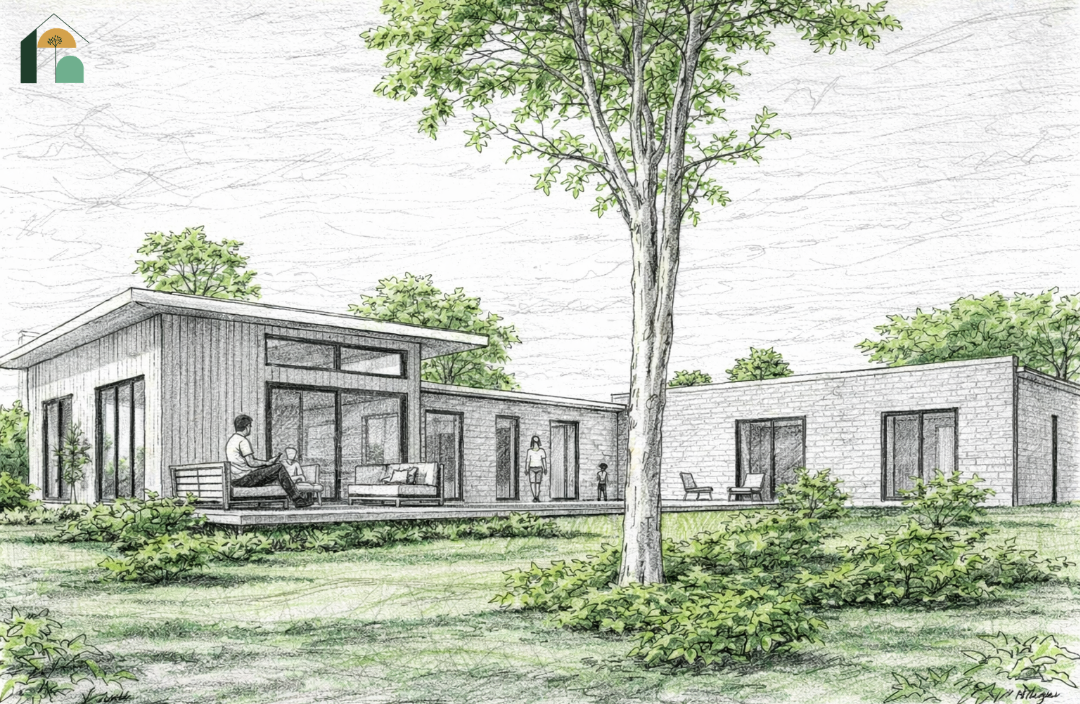
When people talk about affordable housing, the conversation usually focuses on land prices, construction costs or planning approvals.
All important topics.
But there is another factor that quietly shapes how affordable a home truly is — not just on the day it’s built, but for the next 30, 40 or even 50 years.
The building envelope.
And within the envelope, one element plays a surprisingly large role:
Windows and doors.
In many housing projects, windows are treated almost like a finishing item.
Something to pick near the end of the design process.
Something to reduce if budgets get tight.
But windows are not decoration.
They are a performance-critical component of the building envelope.
In a typical home, windows can account for 25–40% of heat loss in winter and significant heat gain in summer. That directly affects:
- energy bills
- indoor comfort
- overheating risk
- condensation and mould
- mechanical system size
- long-term maintenance costs
When cheaper windows are installed simply to reduce upfront costs, those costs rarely disappear.
They simply move somewhere else — usually into higher energy bills and lower comfort for the people living in the home.
For affordable housing in particular, this matters enormously.
Because the people living there are often the most vulnerable to rising energy costs.
In Australia, we also need to consider our very different climate compared to colder regions like Canada or Northern Europe.
Here, homes must handle:
- increasingly intense heatwaves
- large temperature swings between day and night
- strong solar exposure
- cooling as well as heating demands
This means glazing choices must balance:
- thermal performance
- solar control
- air tightness
- durability
If we only focus on lowest upfront cost, we risk delivering homes that are uncomfortable and expensive to operate for decades.
That’s not affordable housing.
That’s simply cheap housing with expensive consequences.
High performance windows — including triple glazing — are often seen as something reserved for luxury homes.
But that assumption is increasingly outdated.
At reimagined habitat, and through our sister company Net Zero Plus, we see firsthand how high-performance glazing can now be delivered far more affordably than many people expect.
Net Zero Plus provides high-performance European-style windows, including triple glazing options designed for Passive House and low-energy buildings.
These windows offer:
- excellent thermal performance
- very low air leakage
- high durability
- outstanding comfort near the glass
In well-designed homes, high-performance windows can:
- reduce heating demand
- reduce overheating risk
- improve comfort near windows
- reduce condensation risk
- support smaller mechanical systems
In other words, they contribute directly to better homes and lower operating costs.
Here’s something that often gets overlooked.
Improving glazing performance is important.
But how we design the openings themselves can also dramatically affect both cost and performance.
We often review housing plans where every room has a sliding door.
Living room? Sliding door.
Bedroom? Sliding door.
Study? Sliding door.
This might seem like a design preference — but it can significantly increase project costs.
Most people don’t realise that sliding doors are usually much more expensive than alternatives such as:
- hinged glazed doors
- French doors
- fixed glazing panels with a single operable door
- high-performance windows
Sliding systems require:
- larger structural openings
- more complex framing systems
- additional hardware and tracks
They also tend to have poorer airtightness compared to hinged doors or casement windows.
This is where good design becomes powerful.
By carefully considering where full-height doors are actually needed, we can often simplify many openings.
For example:
Instead of a full sliding door, we might use:
- a fixed glazing panel with a glazed door beside it
- French doors instead of sliding systems
- well-positioned windows instead of unnecessary door openings
These changes can reduce construction costs significantly.
And the savings can then be reinvested in:
- higher performance glazing
- better frames
- improved airtightness
- external shading
In other words:
Better performance without increasing the overall project cost.
One of the key lessons from building science — and from the Passive House approach — is that buildings work as integrated systems.
Windows interact with:
- shading
- insulation
- airtightness
- ventilation
- orientation
Good glazing design therefore isn’t just about selecting a product.
It’s about integrating windows into the overall building strategy.
That’s when we see the biggest gains in comfort, energy efficiency and long-term durability.
If we want truly affordable homes, we need to shift the conversation.
Instead of asking:
“What’s the cheapest window we can install?”
We should ask:
“What glazing strategy delivers the best long-term outcome for the people living in this home?”
Sometimes the answer is better products.
Sometimes the answer is smarter design decisions.
Often it’s both.
At reimagined habitat, we believe that affordable housing should still deliver:
- healthy indoor environments
- comfortable living spaces
- low operating costs
- durable buildings that perform well for decades
And that starts with getting the fundamentals right.
The building envelope.
The glazing strategy.
The details that quietly shape how a home performs every single day.
Because affordable housing isn’t just about what it costs to build.
It’s about what it costs to live in.