
shower doors
Shower Doors: The Cleaning Nightmare Nobody Warns You About
Written by Simone Schenkel
This is Part 7 of the Design Pitfalls in Australian Homes series. Today we stay in the bathroom, where I’m picking on the humble shower door.
Why People Specify Shower Doors
I’ll give shower doors some credit before I tear into them.
A hinged glass shower door does have one clear purpose: keeping water inside the shower enclosure. In a small bathroom, where the shower sits in a corner or alcove with limited length, a door stops water from spraying out into the rest of the room.
That’s a legitimate problem to solve.
The issue is how we tend to solve it: with frameless or semi-frameless hinged glass doors, with chrome U-channel hinges, with seals that drag along the floor, with magnetic strips that meet down the centre, and with all manner of small mechanical details that make the door beautiful, complicated and impossible to clean properly.
The Hinge Problem
Frameless hinged shower doors hang off two or three pivot hinges, usually chrome or matte black, fixed to the adjacent wall or glass panel.
Inside those hinges:
- water collects on every wash
- soap residue runs down and pools
- humidity sits in the cavity between the metal plates
- mould and limescale grow happily, year after year
You can wipe the outside of the hinge. You cannot clean the inside, because the hinge is sealed shut by its own hardware. Over time, the hinges go from gleaming chrome to grey-brown, and there’s nothing you can do about it without removing the door.
The Bottom Seal Problem
To stop water leaking out the gap at the bottom of the door, there’s usually a clear plastic or rubber seal — a flexible strip — running along the underside of the glass.
That seal drags along the tiled floor every time you open and close the door. It collects:
- hair
- soap
- skin cells
- mould spores
- general bathroom dust
Within six months, that pristine clear plastic seal is a grey-pink colour with mould. You can pull it off and clean it (sometimes), or replace it (annoying, fiddly), but it will always look grim by month seven.
The Vertical Seals
Where the door meets the fixed glass panel, there’s another seal — usually a clear plastic strip that fits over the edge of the glass.
These seals also collect everything. Water sits in them. Soap residue cakes on. They turn yellow over time. They have to be removed and washed by hand, or replaced.
Same story at the magnetic strip in the middle of double doors.
The Glass Itself
OK, this isn’t unique to shower doors — frameless walk-in screens have the same problem.
Untreated shower glass shows every water mark. Without a daily squeegee, you end up with a permanent film of limescale, soap residue and water spots that no domestic cleaner removes properly. The only fix is professional glass restoration, which can cost hundreds of dollars per panel and may need to be redone every couple of years.
A protective coating on the glass (sometimes called “EnduroShield” or similar) helps, but they wear off over time and need to be reapplied.
This is not unique to doors. But because doors have more glass area, more edges and more hardware, the cleaning problem compounds.
So What’s the Alternative?
There are two much better options for most bathrooms.
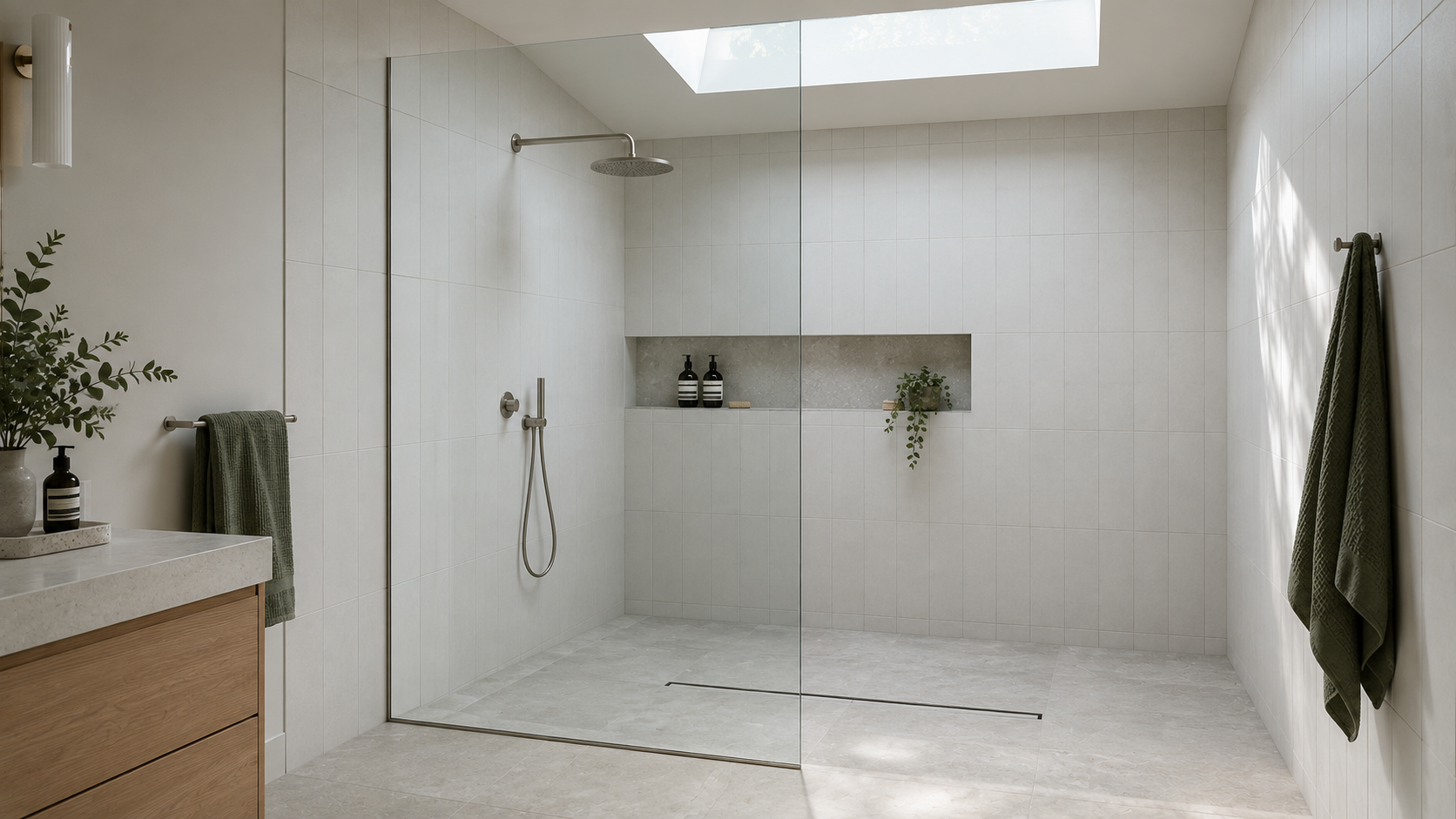
Option 1: A walk-in shower with a single fixed glass screen
A single fixed glass panel, no door, no hinges. You walk around the end of the panel to enter the shower.
To make this work:
- The fixed glass needs to be long enough to catch the spray. Usually 1100–1400mm depending on the shower configuration and how powerful the rose is.
- The shower needs enough floor area beyond the glass that water doesn’t have a clear path out into the room.
- The floor falls need to be set up properly so water drains toward the waste, not toward the opening.
You still have one piece of glass to clean (squeegee after each shower, weekly proper clean). But there are no hinges, no seals, no door tracks, no rubber strips, no magnetic catches. The cleaning load drops dramatically.
Option 2: A walk-in shower with a wall, not glass
This is my preferred option in many cases.
Instead of a glass panel, you put a tiled wall between the shower zone and the rest of the bathroom. The wall is long enough to catch the spray, just like a fixed glass screen would be.
The advantages:
- No glass to clean. Ever. The wall is tiled and wipes down like any other wall.
- More privacy inside the shower.
- A surface for shelving, niches, hooks, or even a window in the right spot.
- A more peaceful, less reflective shower experience — many people actually prefer this once they’ve lived with it.
The only thing you give up is the visual openness of glass. In a small bathroom that needs to feel bigger, a glass screen wins. In a normal bathroom, a wall is often better.
The Wet Room Question
If you’re thinking “but what about the rest of the bathroom getting wet?” — the answer is good detailing.
In a properly designed wet room or walk-in shower:
- The whole bathroom floor is graded subtly toward the shower waste, so any water that ends up outside the shower zone drains away.
- The floor finish is tile or another fully waterproof material.
- The walls near the shower are waterproofed and tiled at least to splash height.
- Ventilation is solid — a proper extraction fan, ducted to outside, on a long timer.
Done well, a walk-in shower (with either a fixed glass screen or a wall) gives you a cleaner, easier, more elegant bathroom than a fully enclosed shower with a door.
A Note on Sliding Shower Doors
Sliding glass shower doors deserve a special mention as the worst option of all.
They have everything bad about hinged doors, plus:
- Tracks at the top and bottom that fill with everything that falls into them.
- Rollers that get gummy with soap and mould.
- Overlapping glass panels that you can never properly clean both sides of, because each panel covers part of the other.
If you remember nothing else from this post: please don’t specify a sliding shower door.
What If You Have Limited Space?
In a really small bathroom — under about 2m by 1.5m — a fixed shower screen with no door can be hard to make work because the spray distance is too short.
In that case, your best options are:
- A single pivot door (one piece of glass that swings) rather than a hinged door with multiple hardware points.
- A semi-frameless door with as few seals and channels as possible.
- A shower curtain, honestly. Modern shower curtains are vastly better than they used to be, easy to wash, easy to replace, and a fraction of the cleaning problem of a glass door. Not glamorous, but functional.
My Take
A hinged frameless glass shower door looks gorgeous on the day it’s installed and gets grottier every year of its life. The hinges, seals and edges are unwinnable from a cleaning perspective.
If you have the space, walk-in is the answer. Use a fixed glass screen if you want the open look, or a tiled wall if you want even less cleaning. Reserve doors for the tiniest bathrooms where you genuinely can’t get the geometry to work any other way.
Start your project with confidence. Book a free 30-minute design consultation with our team.
Up Next
Next in the series: freestanding statement baths — used twice a year, in the way every day.
This is Part 7 of the Design Pitfalls in Australian Homes series. Browse the full series to see all the design choices that look great in theory and fall over in real life.
shower doors shower doors shower doors shower doors shower doors shower doors